Published May 15, 2026
New Construction vs. Resale Homes in Eastern NC: Which One Fits You Better?

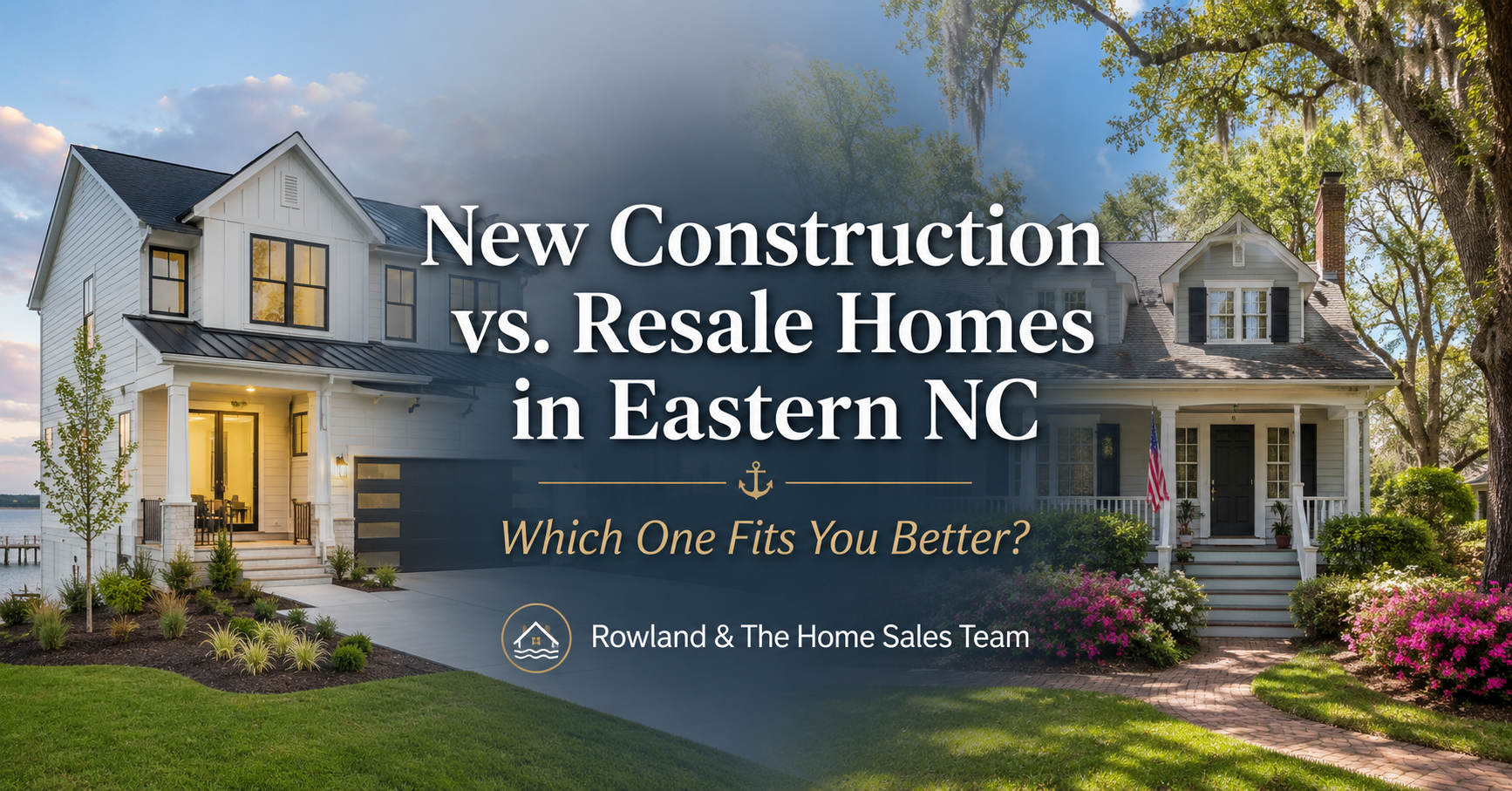
Buying a home in Eastern North Carolina comes with a lot of choices, and one of the biggest decisions is whether to buy a new construction home or a resale home.
Both options can be a great fit depending on your budget, timeline, lifestyle, and long-term goals. Some buyers love the idea of moving into a brand-new home with modern finishes and fewer immediate maintenance concerns. Others prefer the character, location, mature landscaping, and established feel that often comes with a resale home.
There is no one-size-fits-all answer. The better question is: which type of home fits your life better right now?
Below is a practical breakdown to help you compare new construction and resale homes in Eastern NC.
What Is a New Construction Home?
A new construction home is a property that has recently been built or is currently being built. This could include:
- A move-in-ready new home
- A home under construction
- A custom build
- A semi-custom home
- A home in a new subdivision or planned community
In Eastern NC, new construction can be found in growing areas around New Bern, surrounding communities, and neighborhoods where land is still being developed.
New construction is often appealing to buyers who want modern layouts, updated materials, energy-efficient features, and the ability to personalize certain selections.
What Is a Resale Home?
A resale home is a property that has been previously owned and lived in. These homes may range from historic properties and established neighborhood homes to more recently built houses that are simply being sold by the current owner.
Resale homes often appeal to buyers who want:
- Established neighborhoods
- Mature trees and landscaping
- More location options
- Potentially larger lots
- Character or unique features
- A faster closing timeline
In Eastern NC, resale homes can vary widely depending on location, age, condition, updates, and proximity to downtown areas, waterways, schools, shopping, and major roads.
The Main Benefits of Buying New Construction
1. Everything Is New
One of the biggest advantages of new construction is that the home has not had years of wear and tear. The roof, HVAC, plumbing, electrical systems, appliances, flooring, and fixtures are typically new.
That does not mean there will never be issues, but it can reduce the number of immediate maintenance concerns compared to some older homes.
2. Modern Layouts and Features
New construction homes are often built around the way people live today. That may include:
- Open-concept kitchens and living areas
- Larger closets
- Dedicated laundry rooms
- Home office or flex spaces
- Modern bathrooms
- Energy-efficient windows and appliances
- Updated lighting and finishes
For buyers who want a clean, current layout without taking on renovations, new construction can be attractive.
3. Potential Builder Warranties
Many new construction homes come with builder warranties or manufacturer warranties on certain systems, appliances, or materials. Buyers should review warranty details carefully because coverage can vary, but this can offer additional peace of mind.
4. Less Immediate Updating
With a new home, you are less likely to walk in and immediately want to replace flooring, repaint cabinets, update bathrooms, or change old fixtures. For buyers who do not want a project, this can be a major benefit.
The Tradeoffs of Buying New Construction
1. Location May Be Limited
New construction is usually found where land is available. That may mean being farther from historic downtown areas, waterfront locations, older established neighborhoods, or certain parts of town.
If location is your top priority, resale homes may give you more options.
2. Timelines Can Shift
If the home is already complete, this may not be an issue. But if the home is still under construction, weather, materials, labor availability, inspections, and builder schedules can affect timing.
Buyers who need to move by a specific date should make sure they understand the projected timeline and any potential delays.
3. Extra Costs Can Add Up
The base price may not include every feature a buyer wants. Depending on the builder and community, upgrades may cost extra.
Examples may include:
- Premium lots
- Fencing
- Blinds
- Appliances
- Screened porches
- Upgraded countertops
- Landscaping
- Additional lighting
- Flooring upgrades
A new home can still be a smart purchase, but buyers should look beyond the advertised price and understand the full cost.
4. The Neighborhood May Still Be Developing
In newer subdivisions, construction may continue around you after you move in. Roads, landscaping, amenities, and nearby homes may still be in progress.
For some buyers, that is not a problem. For others, an established neighborhood may feel more comfortable.
The Main Benefits of Buying a Resale Home
1. More Established Locations
Resale homes often provide access to neighborhoods that are already built out. This may be especially important if you want to be near downtown New Bern, close to the water, near certain schools, or in a specific community.
The right resale home may place you exactly where you want to be.
2. Mature Landscaping and Neighborhood Character
Established homes often come with mature trees, larger landscaping, finished yards, and a neighborhood feel that has developed over time.
For some buyers, this is hard to recreate with new construction.
3. You Can See What You Are Buying
With a resale home, the home is already standing. You can walk through it, see the natural light, check the yard, evaluate the street, and get a feel for the neighborhood.
There is less imagination involved compared to buying from plans, renderings, or a construction site.
4. Potential for Negotiation
Depending on the market, property condition, seller motivation, and buyer demand, resale homes may offer more room for negotiation than new construction. This could involve price, closing costs, repairs, appliances, or other terms.
That said, every situation is different. A strong resale listing in a desirable location may still be competitive.
The Tradeoffs of Buying a Resale Home
1. Maintenance May Be Needed Sooner
Older homes may need repairs or replacements sooner than new homes. Buyers should pay close attention to:
- Roof age
- HVAC condition
- Plumbing
- Electrical systems
- Windows
- Crawlspace or foundation concerns
- Septic systems, if applicable
- Appliances
- Flooring
- Exterior siding or trim
A home inspection is especially important when buying resale.
2. Updates May Be Needed
A resale home may have older finishes, dated layouts, or cosmetic updates that the buyer wants to change. This is not always a negative, especially if the home is priced accordingly, but buyers should factor renovation costs into the decision.
3. Energy Efficiency Can Vary
Some resale homes have been updated with efficient windows, insulation, HVAC systems, and appliances. Others may not be as efficient as newer homes.
Utility costs and long-term comfort should be part of the conversation.
Which Option Is Better for First-Time Buyers?
First-time buyers may like new construction because it can feel simpler: fewer immediate repairs, modern features, and a fresh start.
However, resale homes can also be a great fit if the buyer wants a better location, a lower price point, or a home with character.
The right choice depends on:
- Monthly payment comfort
- Down payment
- Closing timeline
- Maintenance tolerance
- Desired location
- Willingness to do updates
- Long-term plans
A first-time buyer should not choose new construction just because it feels easier, and they should not choose resale just because it seems more affordable. The full picture matters.
Which Option Is Better for Relocating Buyers?
Relocating buyers often need to balance lifestyle and logistics. If you are moving to Eastern NC from another area, a resale home may help you get into a specific location faster. You can tour the area, compare neighborhoods, and move into an existing home on a more predictable timeline.
New construction may be a better fit if you are planning ahead, have flexibility, and want something newer with fewer immediate projects.
For relocating buyers, it is especially helpful to work with a local real estate team that understands the area beyond the listing photos. Neighborhood feel, commute patterns, flood zones, property condition, insurance considerations, and local lifestyle all matter.
Which Option Is Better for Downsizers?
Downsizers often lean toward new construction because they want less upkeep, a cleaner layout, and a home that fits their next season of life.
But resale homes can also work well, especially if the location is right and the home has already been updated.
A good downsizing decision usually comes down to:
- Ease of maintenance
- One-level living
- Storage
- Yard size
- Proximity to family, shopping, healthcare, restaurants, or recreation
- HOA rules and fees
- Long-term comfort
Do Not Forget About the Total Cost
When comparing new construction and resale homes, look beyond the purchase price.
For new construction, consider:
- Builder upgrades
- Lot premiums
- Window treatments
- Fencing
- Landscaping
- Appliances
- HOA dues
- Closing costs
- Future neighborhood development
For resale homes, consider:
- Inspection findings
- Repairs
- Updates
- Age of roof and HVAC
- Insurance
- Utility costs
- Termite/moisture concerns
- Septic or well systems, if applicable
The best home is not always the one with the lowest price. It is the one that fits your budget, lifestyle, and long-term plans.
Questions to Ask Before You Decide
Before choosing between new construction and resale, ask yourself:
- Do I need to move quickly, or can I wait?
- Do I want a newer home with fewer immediate updates?
- Is location more important than finishes?
- Am I comfortable with ongoing construction nearby?
- Do I want an established neighborhood?
- Can I handle repairs or renovations if needed?
- What monthly payment am I comfortable with?
- What are the long-term costs of this home?
- How long do I plan to stay?
- Which home feels like it supports the way I actually live?
These questions can help narrow the search before emotions take over.
Final Thoughts: The Right Home Depends on the Buyer
New construction and resale homes both have advantages. New construction may offer modern layouts, updated systems, and less immediate maintenance. Resale homes may offer stronger location options, established neighborhoods, character, and a clearer picture of the property from day one.
The key is not deciding which option is “better” in general. The key is deciding which option is better for you.
If you are comparing new construction and resale homes in Eastern North Carolina, Rowland & The Home Sales Team can help you look at the full picture: price, location, condition, timeline, lifestyle, and long-term value.
Whether you are buying your first home, relocating to the area, downsizing, or looking for your next move, having local guidance can help you make a more confident decision.

Rowland Bowen
Team Lead, Real Estate Professional | Rowland & The Home Sales Team | Realtor New Bern, NC
or another way