Published May 6, 2026
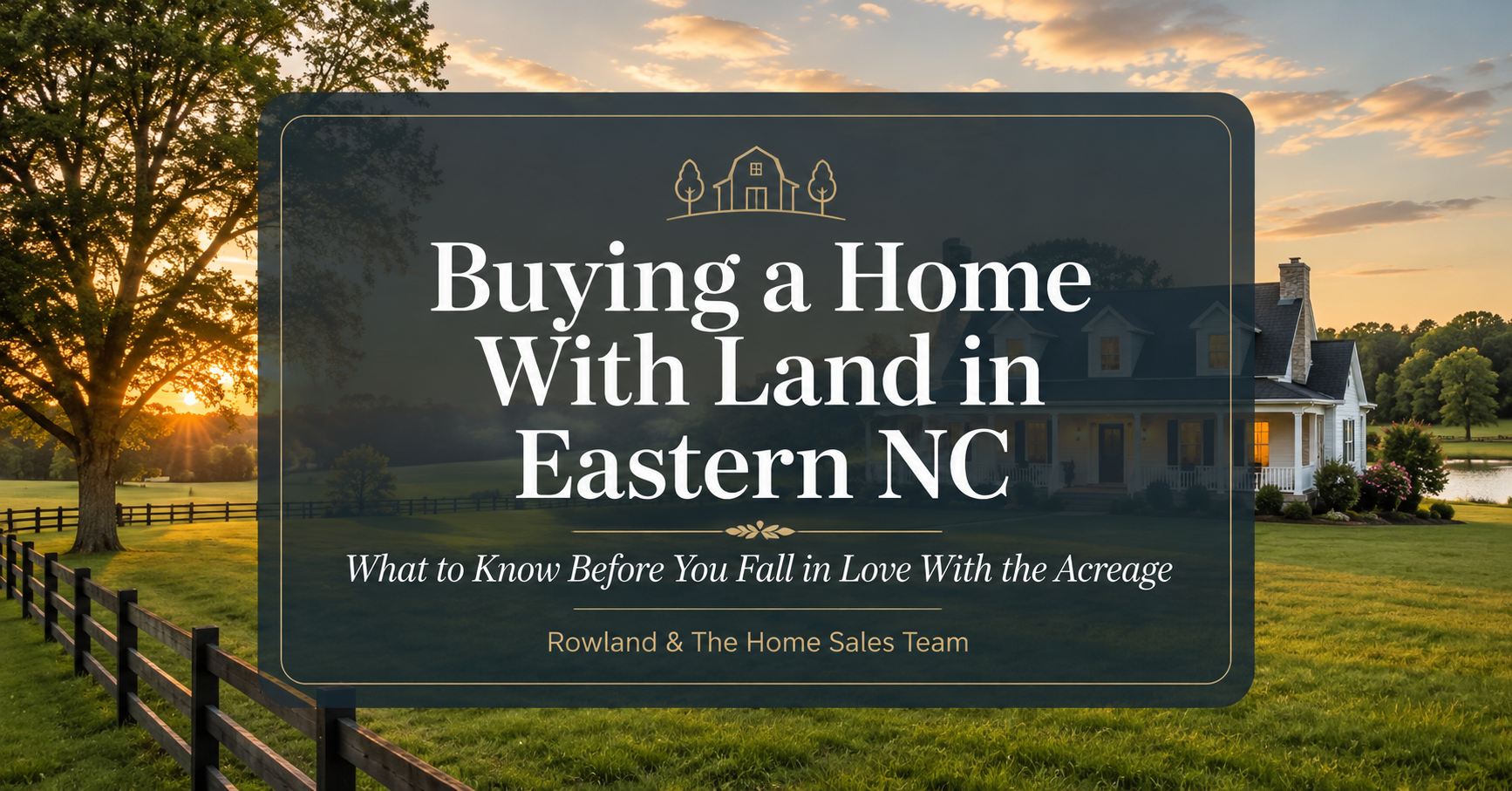
Buying a Home With Land in Eastern NC: What to Know Before You Fall in Love With the Acreage

For many buyers, the dream is not just a house. It is space.
Room for a garden. Room for a workshop. Room for kids, pets, chickens, boats, trailers, or simply a little more breathing room between neighbors. In Eastern North Carolina, homes with land can offer a lifestyle that is hard to find in more crowded markets.
But buying a home with acreage is different from buying a home in a traditional neighborhood. The extra space can bring freedom, privacy, and flexibility, but it can also come with extra questions.
Before you fall in love with the land, it is important to understand what you are really buying.
Why Homes With Land Appeal to Eastern NC Buyers
Eastern North Carolina offers a wide mix of property types. Some buyers want a classic neighborhood close to schools, shopping, and downtown. Others are looking for more space outside city limits, where they can enjoy a quieter lifestyle and fewer restrictions.
A home with land may appeal to buyers who want:
- More privacy
- Space for hobbies or animals
- Room for a detached garage, shop, or storage building
- Garden or homestead potential
- Boat, RV, or trailer storage
- Fewer neighborhood restrictions
- A more rural or peaceful setting
That kind of property can be a great fit, but buyers need to look beyond the house itself.
1. Understand the Difference Between Acreage and Usable Land
Not every acre is equal.
A property may be listed with several acres, but that does not always mean every part of the land is usable. Some areas may be wooded, low-lying, wet, heavily sloped, difficult to access, or limited by easements.
Before buying, look closely at:
- Cleared vs. wooded acreage
- Drainage and low spots
- Road frontage
- Driveway access
- Buildable areas
- Flood zone status
- Wetlands or protected areas
- Easements or shared access roads
A property with three acres may feel very different depending on how that land is shaped, cleared, and positioned.
2. Check the Flood Zone and Drainage
In Eastern NC, water matters.
Some properties with acreage may sit near creeks, rivers, low-lying areas, or rural drainage systems. Even if the home itself looks dry and well-maintained, buyers should pay attention to how water moves across the land.
Ask questions like:
- Is the home in a flood zone?
- Is any part of the property in a flood zone?
- Has the land held standing water after heavy rain?
- Are there drainage ditches, culverts, or low areas?
- Is flood insurance required or recommended?
- Has the property ever had water intrusion?
A little research upfront can help prevent major surprises later.
3. Know What Utilities Serve the Property
Homes outside city limits may not have the same utilities as homes in town.
A rural or semi-rural property may rely on:
- Septic system
- Private well
- Propane gas
- County water
- Private trash service
- Longer utility runs
- Internet options that vary by location
This does not mean the property is a bad choice. Many buyers prefer these setups. But you need to know what systems are in place, how old they are, and what maintenance may be required.
For example, if the home has a septic system, buyers should understand the system size, location, age, and condition. If the home has a private well, water testing may be worth considering.
4. Review Zoning, Restrictions, and Intended Use
Before buying land, make sure the property fits the way you want to live.
Some buyers assume that if a home is outside a city neighborhood, they can do anything they want with the land. That is not always true.
Depending on the location, there may be:
- Zoning rules
- Deed restrictions
- HOA rules
- Setback requirements
- Easements
- Limits on animals
- Limits on accessory buildings
- Rules about manufactured homes, fencing, or business use
If your goal is to add a workshop, park equipment, keep animals, run a home-based business, or build another structure later, those details need to be checked before closing.
5. Think About Maintenance Before You Buy
More land usually means more responsibility.
That extra space can be a huge benefit, but it may also mean more mowing, clearing, drainage maintenance, tree work, fence upkeep, driveway repairs, and general property care.
Before making an offer, think honestly about:
- How much land you want to maintain
- Whether you need a mower, tractor, or equipment
- How much wooded area you want
- Whether fencing is already in place
- How much privacy you want vs. how much upkeep you can handle
- Whether the driveway, ditches, or culverts need attention
The land should fit your lifestyle, not just your imagination.
6. Look at Location Differently
When buying acreage, location still matters, but the priorities may shift.
Instead of only thinking about distance to downtown or neighborhood amenities, buyers should also consider:
- Drive time to work
- Distance to grocery stores and medical care
- School district
- Road conditions
- Internet availability
- Emergency service access
- Nearby farms, timber land, or commercial uses
- Future development nearby
A quiet property can be perfect, but buyers should understand the surrounding area before committing.
7. Get the Right Inspections
A standard home inspection is important, but a home with land may require additional due diligence.
Depending on the property, buyers may want to consider:
- Home inspection
- Septic inspection
- Well inspection or water test
- Survey
- Flood zone review
- Termite inspection
- Crawl space evaluation
- Roof and HVAC evaluation
- Review of easements or access agreements
The goal is not to make the process harder. The goal is to understand the property clearly before you own it.
8. Think About Resale Before You Buy
Even if you plan to stay for years, resale still matters.
Homes with land can be very desirable, especially when they offer a strong mix of location, usable acreage, privacy, and well-maintained improvements. But properties that are too remote, difficult to maintain, poorly drained, or limited by restrictions may have a smaller buyer pool later.
A good real estate agent can help you look at both sides:
- Does this property fit your lifestyle now?
- Will it appeal to future buyers when it is time to sell?
That balance matters.
The Right Land Can Change How a Home Feels
A home with land can offer something special: freedom, space, privacy, and a lifestyle that feels personal.
But the smartest buyers do not just fall in love with the acreage. They ask the right questions, review the details, and make sure the land supports the life they want to build.
If you are looking for a home with land in New Bern, Craven County, Pamlico County, or the surrounding Eastern NC area, Rowland & The Home Sales Team can help you compare properties, understand local details, and move forward with confidence.
For guidance on your next move, contact Rowland Bowen with Rowland & The Home Sales Team at 252-631-6787. The team is based at 1320 McCarthy Boulevard in New Bern, NC.

Rowland Bowen
Team Lead, Real Estate Professional | Rowland & The Home Sales Team | Realtor New Bern, NC
or another way